
resources · incident communication
Be First or Be Right? Confirm before you release
By Corey Dierdorff, MPIO · July 11, 2026 · 6 min read
It is 11:14 a.m. A 911 call says shots fired at a parade. Your phone is already lighting up. A news helicopter is overhead and a reporter is doing standups off cell-phone video. You have no confirmed casualty count, no suspect, and no idea if it is over.
The newsroom does not care that you do not know yet. They are going to fill the next ten minutes with something. The only question is whether it is your words or someone else's.
If you wait for perfect information before you say anything, rumor and speculation own the story before your first sentence. Your job in the first hour is not to have all the answers. It is to be the steady, credible voice that says what is known, says what is not, and says when you will be back.
Be first, be right, be credible.
People hear those three as a ranking. They are not. Being first only helps if you are right, because a correction does not replace a wrong fact. It stacks on top of it. Every walk-back trains your public to wait for the rumor instead of your release.
So you go first with what you can stand behind: confirmed facts, plus an honest here is what we do not know yet, and here is when I will update you.
One voice, one number.
It is 1:40 p.m., two hours in. You just finished your briefing. You said six confirmed dead, suspect still at large, next update at 2 p.m. Then a reporter walks up holding her phone. The county sheriff just told a different crew it was seven. A city spokesperson posted that a person of interest is in custody.
Three officials. Three numbers. One of them is you. To the public watching at home, you do not look like three agencies coordinating. You look like nobody is in charge.
Message discipline under pressure comes down to two habits.
- One voice. Pick the spokesperson and route every agency's facts through the Joint Information System before anyone releases them. The working rule on a good incident: if it did not clear the JIC, it is not cleared.
- One number. Walk into every briefing with the single figure you most want quoted, and say it three times. Reporters quote what is concrete and repeated. Hand them ten numbers and they pick one for the headline, maybe not the one that tells the true story. Choose it for them. And when a figure is preliminary, say the word preliminary every time you say the number, so the update later reads as an update instead of a reversal.
Walking it back.
You released a number an hour ago. It was wrong. The real one just came in. The wrong number is already in three headlines and a few hundred shares.
The clock you are on now is not the incident clock. It is the correction clock, and it started the moment you were wrong, not the moment you found out.
Every PIO releases something wrong eventually. The skill is not avoiding corrections. It is correcting so fast and so cleanly that the fix costs less than the error did.
Run the same five moves every time.
- Lead with the correct fact. People need the right information before they need your apology. The first line is the new number, not the mea culpa.
- Own it plainly. We released an incorrect figure earlier, and the confirmed number is now X. No mistakes-were-made passive voice that hides who said it.
- Match the channel and the reach. An error shouted on camera is not fixed by a quiet follow-up post. Correct where you were wrong, at least as loudly.
- Do not headline the falsehood. State the correct fact first, name the error briefly so people can update, then move on.
- Reset the clock. Give the next-update time so the correction reads as control, not panic.
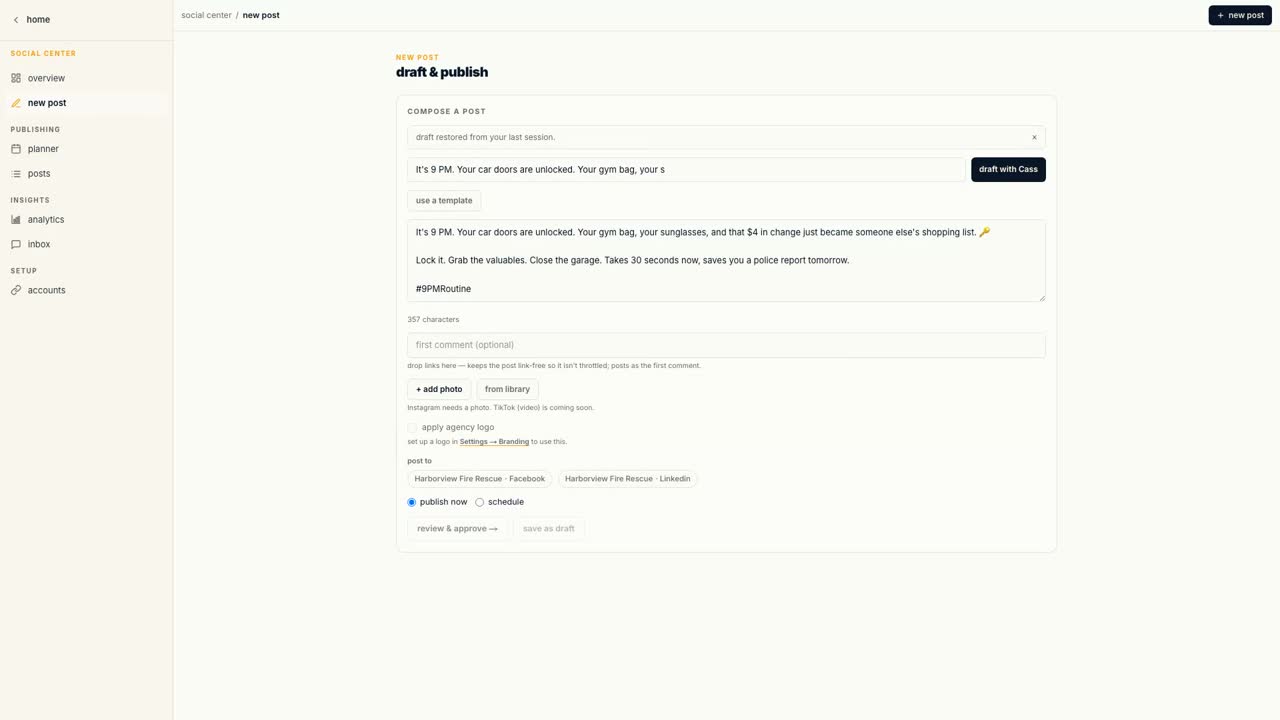
watch it work
Post to social, with an approval gate
One approval, every channel.
this doctrine is built into Cass.
Every draft Cass writes carries these disciplines by default, and a credentialed PIO approves every word. Beta is free.
Claim your seat →